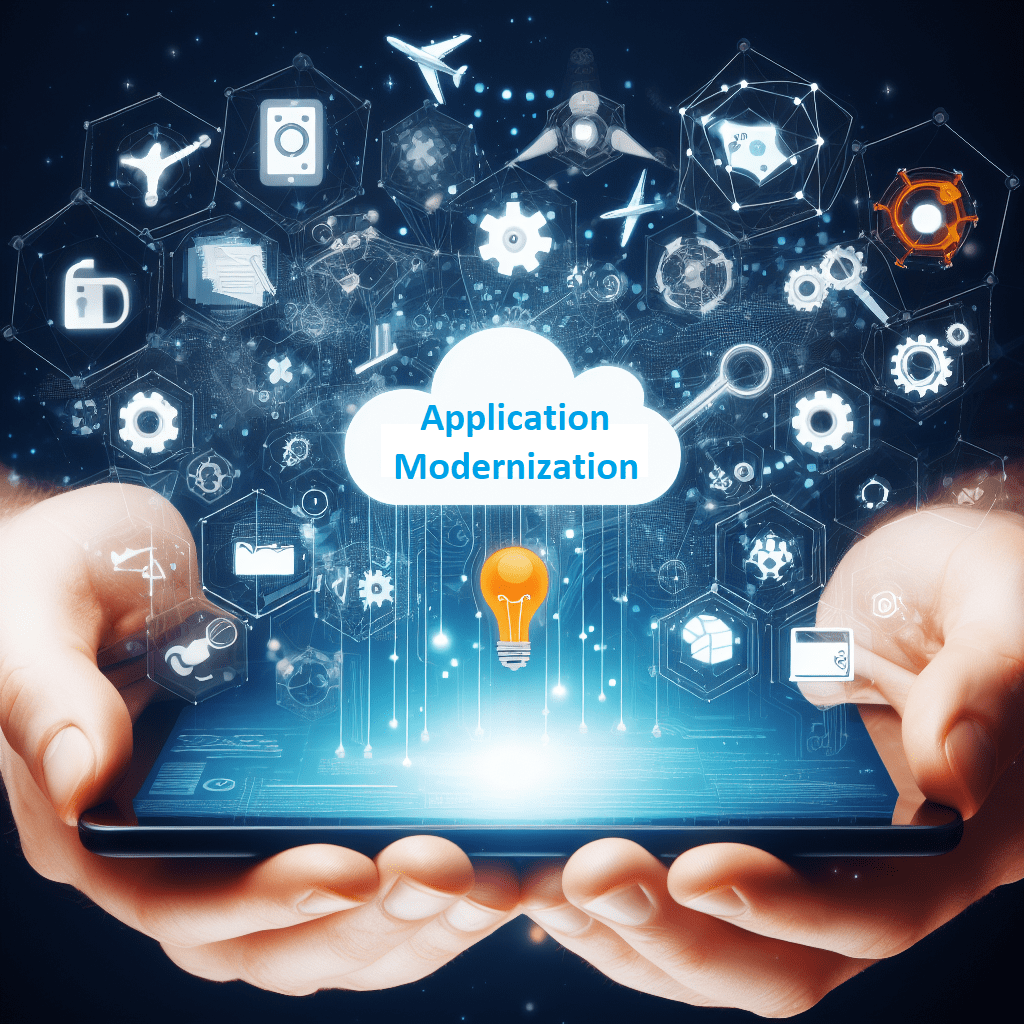

Application Modernization
Application modernization is the process of updating and transforming legacy software applications to align with current technology standards, architectures, and business needs. This can involve:
- Cloud migration: Moving applications to cloud infrastructure like AWS, Azure, or GCP.
- Containerization: Packaging applications using containers like Docker, Kubernetes.
- Microservices architecture: Breaking down monolithic apps into smaller, independent services.
- Refactoring: Rewriting code to improve performance, scalability, and maintainability.
- Replatforming: Migrating apps to new platforms, such as moving from on-premises to cloud or from one cloud to another.
- Integration with new technologies: Incorporating AI, ML, IoT, or other emerging technologies.
- User experience modernization: Updating UI/UX to improve user engagement and accessibility.
- Data modernization: Upgrading data storage, processing, and analytics capabilities.
- Security and compliance updates: Enhancing security features and ensuring compliance with regulations.
- Legacy code renovation: Updating outdated programming languages, frameworks, and databases.
Application modernization aims to:
- Improve scalability and flexibility
- Enhance user experience and engagement
- Increase efficiency and reduce costs
- Support business growth and innovation
- Reduce technical debt and risks
- Improve security and compliance